

Is SMSTS a Hard Course? What the SMSTS Course Difficulty Really Looks Like
SMSTS course difficulty is one of the first things people search before booking, and it is a fair question to ask before committing five days and a chunk of your budget. The short answer is that SMSTS is not intellectually difficult, but it is demanding in terms of pace, volume of information, and concentration. It is easy to assume a construction training course will be similar to a trade qualification, mostly practical and hands-on, but SMSTS is closer to a compressed classroom module, and that catches some delegates off guard. Here is what actually makes the week feel hard, and what does not, so you can walk in knowing what to expect rather than guessing from forum posts and secondhand accounts.
What Does the SMSTS Course Actually Involve?
The Site Management Safety Training Scheme runs over five full days and is aimed at site managers, project managers, and anyone stepping into a site management or supervisory role in construction. The syllabus covers UK health and safety law, risk assessment, environmental management, welfare provisions, accident reporting, and the legal responsibilities that come with managing a site. It is delivered in a classroom or live online format, with a trainer working through each module in sequence rather than leaving you to self-study. Delegates typically move through several topic areas each day, with group discussion and case study exercises used to reinforce the legal and practical material rather than pure lecturing. Early in the week the focus tends to be on legal frameworks and the duties of a site manager under UK law, while the later days shift toward more applied topics such as managing subcontractors, controlling specific site hazards, and environmental compliance, before everything is drawn together for the final review and test.
What Makes SMSTS Course Difficulty Feel High for Some Delegates

For most people, SMSTS course difficulty comes down to pace rather than complexity. Five consecutive days of classroom-based learning is a lot to sit through, especially if you are used to working on-site rather than in a training room. The subject matter itself is not advanced, but there is a lot of it, and some of the terminology around legislation and regulation will be unfamiliar if you have not encountered it before. Delegates who go in expecting a light refresher are usually the ones who find the week harder than they anticipated. Delegates who go in expecting a full working week of concentrated learning tend to find it manageable. Sitting still and absorbing information for five days is also a different kind of tiring than physical site work, and that adjustment alone accounts for a lot of what people describe as difficulty.
What Does the SMSTS Course Actually Involve?
SSSTS, the Site Supervisors Safety Training Scheme, covers similar ground to SMSTS but over two days rather than five, and at a level aimed at supervisors rather than site managers. SMSTS goes into greater depth on management-level legal responsibility, which is why it runs longer, not because any single topic is harder to grasp. If you already hold an SSSTS certificate, you will recognise a good portion of the SMSTS syllabus, which tends to make the longer course feel more manageable rather than less. Someone moving straight from a trade role into site management without that stepping stone will simply be covering more new ground in the same five days, which is worth factoring in when you plan your preparation time.
The SMSTS Exam - What to Expect
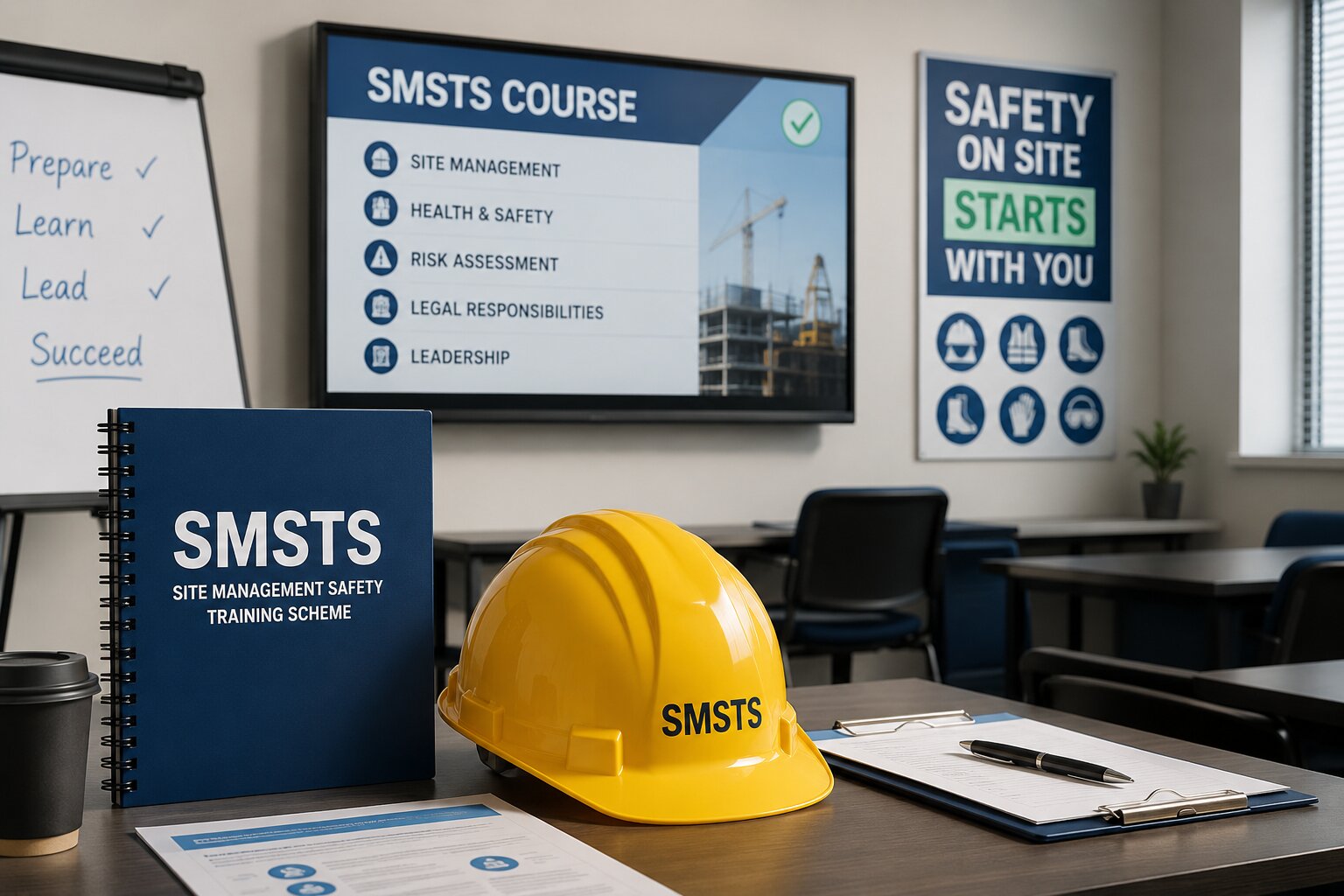
The course ends with a multiple-choice test covering the material from across the week. It is not designed to catch people out, and providers generally build in time throughout the course to review key points before the test, often with a mock run-through on the final afternoon so the format itself is not a surprise. Most delegates who attend consistently and take notes pass without difficulty, and a resit is normally available if you do not pass first time, so one difficult question early in the test is not the end of the process. The pass mark reflects a solid working understanding of the syllabus rather than a near-perfect score, which is another reason the test tends to feel less daunting once delegates actually sit it than it did beforehand. If you want to understand why this level of site management training is a legal and practical priority in UK construction, the Health and Safety Executive publishes guidance on construction site duties that sits alongside what SMSTS covers.
Tips to Reduce SMSTS Course Difficulty Before You Start
A few small habits make a genuine difference to how the week feels, particularly if you have not sat through classroom-based training in a while, and none of them require any special preparation beyond a bit of planning:
- Get a proper night’s sleep before each day, five days in a classroom is tiring in a way site work is not.
- Take notes as you go rather than relying on memory for the test at the end.
- Ask the trainer questions in the moment instead of letting confusion build up over the week.
- If you already hold an SSSTS certificate, revisit it beforehand, the two courses overlap on core health and safety principles.
- Read through any pre-course material the provider sends rather than skipping it, it removes a layer of unfamiliarity on day one.
- Treat it as a full working week, not a light refresher, and block out your diary accordingly so you are not distracted by other work.
Who Tends to Find SMSTS Easier?
Delegates already working in a supervisory role, or who hold an SSSTS certificate and are progressing into site management, generally find the course more straightforward, since much of the content builds on what they already know rather than starting from zero. People coming in from a purely trade background with limited prior exposure to formal health and safety training tend to need slightly more focus in the first day or two while the terminology beds in, but this evens out quickly once the course moves into practical case studies. Either way, prior experience shortens the adjustment period rather than changing whether the course is passable, so it is worth booking with confidence even if this is your first classroom-based qualification.
If you are ready to book, you can browse SMSTS course dates and formats, including block week, weekend, day-release, and live video-link options, and choose whichever fits around your current site commitments.
Overall, SMSTS is a demanding week rather than a difficult one. The content is manageable for anyone with basic site experience, and the structure of the course, with a trainer guiding you through each module and a final test that reviews rather than tricks, is designed for people to pass, not to fail. If you go in prepared to concentrate for five days, take notes, and engage with the material, you should come out the other side with a pass and a clearer understanding of your responsibilities on site. Most of the anxiety around SMSTS course difficulty comes from not knowing what the week looks like in advance, and once that uncertainty is removed, the course itself is very achievable for anyone with a genuine grounding in construction work.
Frequently Asked Questions
SMSTS is not intellectually difficult, but it is intensive. It runs over five full days and covers a large amount of health and safety, legal, and site management content, so the challenge is usually pace and volume rather than complexity.
There is no formal academic qualification required to book SMSTS. It is aimed at people already working in, or moving into, site management and supervisory roles in construction, including those progressing on from an SSSTS certificate.
SMSTS pricing depends on the course format and location, since block week, weekend, day-release, and live video-link options are all priced differently. Checking current prices against a specific course date and location is the most accurate way to compare.
SMSTS is built specifically for construction site management and is shorter and more affordable. NEBOSH is a broader health and safety qualification recognised across multiple industries. Many professionals in construction hold both, depending on their career direction.